Showing posts with label expectations. Show all posts

Tuesday, August 18, 2020

Returning to Physical Classrooms - Some Thoughts

 I wrote a long thread on Twitter today, about my thoughts as we prepare to in-person classrooms three weeks from today. Here is the text of that thread : 

ImageImage

Context : I am a public school teacher in Nova Scotia, Canada. We have 4 active cases of Covid-19 in the province. We are requiring a 14-day self-isolation period for all travellers coming from outside the Atlantic provinces. Masks are required in all indoor public spaces for people 2 years of age and up (grocery stores, restaurants, hair salons, etc.) Masks will be required in the classroom for grades 4 and up where students are not able to be 2m apart (read: the majority of classrooms)

Compliance with the above measures are part of the reason we have so few cases in the province. We did the work to limit opportunities for the virus to spread. We will continue to do what we can to limit the spread when we return to our physical buildings with students in 3 weeks.


There are many valid concerns about class sizes not allowing for physical distancing in classrooms, about where students and staff will eat lunch, about how we will navigate frequent hand washing/sanitizing of surfaces, and about the state of our ventilation systems. 


Teachers, myself included, have indicated that we need more time to prepare to welcome students back into physical classrooms in September. The physical reasons listed above are part of that - we need time as school staff to discuss what those things will look like for our specific sites. In addition, we need time to debrief the past 6 months, in the context of a global pandemic, the science-denial happening in parts of the world, systemic racism, and the fact that we will have staff and students alike who view school as an unsafe place right now.


We need time to reconnect with our colleagues in an authentic, compassionate way. This isn't something that can be done in two days while we are doing all of the other things that need to happen before students walk through the doors of our classrooms. How are we? What do we need? Who is struggling? Who is in a space to provide support to others? What does it feel like to be in physical proximity to so many people outside of our own families again? These questions are so important to discuss/consider before we interact with students.


Having time to collectively consider/discuss those questions is essential. Lori Desautels says we need to secure our own oxygen mask first. There will be a lot coming up for the adults in the building that needs to be addressed before we are ready to help students.


We also need time to plan how we will run our classes with the restrictions in place. My classroom involves small-group collaboration, sharing of art materials, circle discussions, one-on-one conferences, whole-class discussions, and lots of opportunities for movement. I use a wide variety of strategies to practice "brain intervals" or "brain breaks", many of which are self-directed and involve the use of physical objects such as puzzles, games, fidgets, and brain teasers. I need time to rethink these strategies in ways that are safe. My classroom environment is what I call “organized chaos” - students make choices about where to work, and have open access to technology and supplies. I begin the year with a collaborative design challenge inspired by John Spencer. I need time to plan how to do this in a new context. 


Sitting in rows all facing forward doesn't lend itself to the best practices I have developed over my 16 years as a middle school teacher. I need time to collaborate with other teachers in order to find ways of delivering the best possible educational experience for students. We need time, not just to understand new procedures and health guidelines, but to come together and plan a way forward in a very different environment. 


Alex Shevrin Venet says students and staff are likely to be hyper-vigilant when we return to in-person classrooms. Every sniffle and cough may be scrutinized, every improperly worn mask may be pointed out. Staff need time to develop strategies to help mitigate this hyper-vigilance.


I am excited to return to my classroom in person, and I need time to get ready. What could staff do better if we were given the first week to prepare in a meaningful way, before students enter our classrooms?


Monday, March 25, 2019

It's the Little Things

Sometimes, it's the smallest things that stand out. I had to be out of my classroom today to fill in for the principal. This was a sudden occurence, for a sad reason, and it is the day after March Break. My plan was to spend the day reconnecting with my students, checking in, getting excited for the final stretch of this school year.  

When I am going to be out of my classroom, especially if it is unexpected, I always email my students with a plan of what the day will entail. I teach my homeroom for upwards of 3 hours per day, in a variety of different subject areas, so prepping for a substitute can be a daunting process. Emailing the students puts some of the onus on them to get things accomplished even when I'm not in the room. It cuts way down on, "But the substitute didn't tell us what we were supposed to do!" 

Although my students are growing up as "digital natives", they are not very diligent at checking their emails. I often will include a little challenge at the end, so that those who do read all the way through have a fun response to send to me (and a reward in Classcraft for such a response never goes amiss!) Last night, as I will not likely have time to check in with each of them today, my challenge was for them to send me a picture expressing how they feel about coming back to school after March Break. The two that I chose to include reflect the excitement I feel about our upcoming Passion Projects, our end of year Interdisciplinary Unit, and my normal excitement at reconnecting with my students after a break.

Bitmoji ImageBitmoji Image


Here are the pictures I received from five students in response:


Image result for noone is as excited as me


It's the little things that make a difference. Emailing to let my students know I will be out of the classroom is a tiny, easy thing - I copy and paste notes from the plans I make for my substitute. Letting them know I am excited to see them again costs me nothing, and the responses I get tell me so much (I'll be checking in with the student who sent "ok" and no picture to make sure things are really OK with them). Even though I'm not in my classroom today, I feel like I reconnected in a small way.

Thursday, February 7, 2019

It Takes Time, and it is Incredibly Worth It

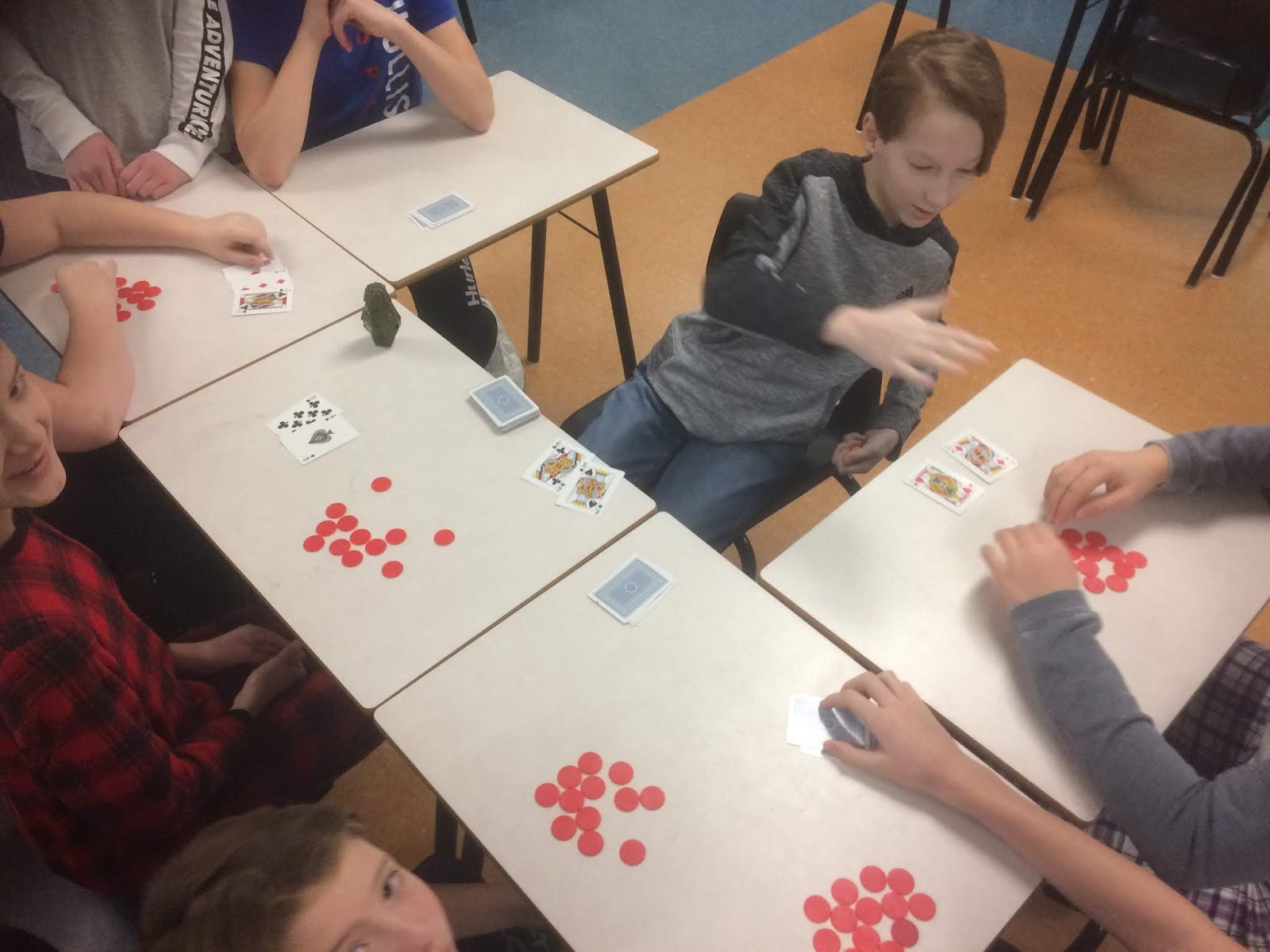
Today was Global School Play Day (globalschoolplayday.com) and my students and I participated wholeheartedly. There was a wonderful hum in the room all day, with all of my students engaging in unstructured play time. They organized themselves, chose their activities, rose to the expectations we had set out, and generally had an awesome day. The activities they chose were varied and completely self-directed.


Some students preferred to spend their time reading...
... or drawing ...


... or learning to play chess!


Some of the highlights from the day include:

- My newest student (arrived just three weeks ago) noticing someone not being included and inviting them to take part in a game without making a big deal out of it.

- The sincere and sudden vocal excitement from all players when another player took a risky move in Black Jack and it paid off. The rest of the activity in the classroom stopped and we all revelled in the glory of a well-timed risk.


- This exchange, fully embracing the expectation to be good communicators :
     "Do you feel like playing Spot It with me?"
     "Not right now, but when I'm done this game of Solitaire I will."
     "OK, sounds good."


- This statement when I approached a group playing Cranium, showing their willingness to improvise. "We don't really know what the actual rules are, so we made up our own. Is that OK?" YES.


One of the most important contributors to the success of GSPD was the lead-up over the two days preceding the actual event. As a class, we spend a significant amount of time focused on building strong community, so I already have some structures in place to set expectations collaboratively with my students. For this activity, I began by outlining my expectations of them for the day.

Students then took some time to come with expectations they had of me and of each other. Each class came up with their own, and the differences in their expectations is reflective of the culture of the individual classes. The grade 8s spend a lot of time with me (at least 3 hours daily), while the grade 7 class only comes to me for an hour each day. As a result, we haven't had as much time to focus on community building.

Grade 8 Expectations


Grade 7 Expectations


We also talked about what they were excited about for a day devoted to unstructured play, and what they were worried or concerned about. This part of the conversation was very helpful to me, as it let me put some of their worries to rest (some worried about what would happen if a toy was accidentally broken, some that they would not be able to handle a full day without an adult organizing them into activities and groups, others that there might be judgement about what games or activities people chose) I was so impressed with their openness in sharing their worries, and the care they took in responded to the concerns of others (some of the expectations above came out of the conversation about worries) Without those conversations ahead of time, I think our day could have played out very differently. Having a list of expectations that we co-created allowed me to quickly make reference to #4 for example, and students would use them to remind each other of what they should be doing.

This student taught multiple classmates how to play chess over the course of the day

Students creating a marble maze together


I had a moment of concern when I sent out my memo to parents last week, explaining the event. We have had some school closures lately because of weather, and this would be another day without "real school", but I did not receive any negative responses from parents at all. I've been really focused on building community with my parents this year as well, through very regular communication about what goes on in our classroom. I hope and believe this has contributed to a certain level of trust when it comes to some of the paths I take with my students.

Grade 7s at play!


Building a strong community is the reason I can engage in the types of activities I write about on this blog. It takes time, and it is incredibly worth it.


Wednesday, March 2, 2016

Dr Seuss as Inspiration

Appropriately, today is "Dr Seuss Day". My grade 7 English Language Arts class has been working on an author study based on Dr Seuss for the past few weeks. The final aspect of this unit is to create their own "Seussville" character, and to write about their character using Dr Seuss-style writing. This week, students were engaged in what I like to call Organized Chaos while they brought their characters to life.

It's not always easy to achieve Organized Chaos in a classroom. It takes a lot of discussion and negotiation to get students to the point where they can be working independently, on-task, taking risks, helping each other, making messes (and cleaning them up!) and just generally being creative without a whole lot of intervention on my part. We've been working towards this point since the beginning of the year, but with only 30 minutes per day it takes time to get students on board with my particular brand of Organized Chaos and have them be successful. For the past two Wednesdays, we have had 60 minutes of class time together, and we have unlocked this achievement - and I couldn't be happier! This particular group of students will be in my homeroom next year, which translates into roughly 3 hours with me per day. It makes me look forward to next year, knowing that they are already skillful "Mme Gaudet Interpreters" ;-)

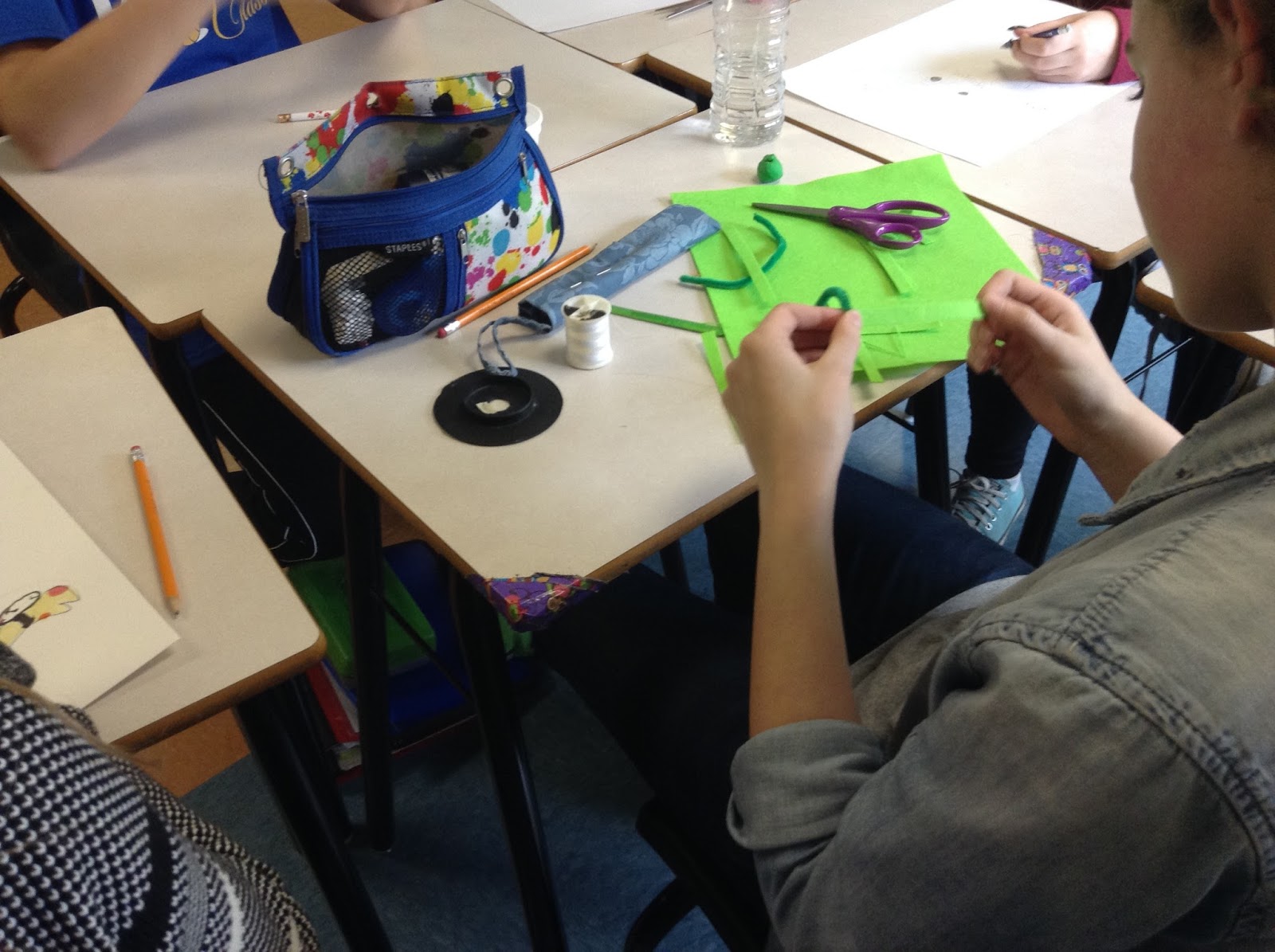
Here are some of their Seussville characters in progress. You'll notice that they are using a wide variety of supplies to achieve their desired goal. Lots of problem solving is going on in my classroom these days...


Friday, May 15, 2015

Teachers, We Need to do Better

Teachers, we need to do better.

For the past ten days, I have been on tour with Xara Choral Theatre, bringing a show called Fatty Legs (based on the book by the same name) to schools and communities around the Maritime Provinces.

The show deals with the reality of the Residential School System in Canada, which is something that we are just starting to teach about in schools. For a long time, this practice of removing Aboriginal children from their homes, and placing them in schools with the aim of erasing their culture (“Kill the Indian to save the child” was the official wording), was not acknowledged – even given the fact that the last school of this type closed in 1996. I only learned about this part of Canadian history when we first did the show in 2011 for the Truth and Reconciliation Commission event in Halifax. Since then, I’ve made sure to teach at least my homeroom about it each year, by reading and discussing the book Fatty Legs.

I was thrilled that we were finally able to remount the show and tour it to schools. We performed for over 4000 students during our ten days of touring.
Performing in front of a rapt audience of students in grade 2 through 6


Most schools were very receptive, particularly at the elementary and middle school levels. We were prepared for students to have questions about the performance, and about the residential schools. We were prepared for people to express anger, sadness, confusion – and those reactions were present when we did our Q&A sessions after each show. Opening honest and constructive dialogue was one of the main goals of this show.

However, we had some very negative experiences in the last two days of touring. In two separate high schools, students exhibited a complete lack of respect for both the subject matter and the fact that 15 people were attempting to perform in front of them.

In one of the schools, students openly mocked the dancer by mimicking her movements. They were spoken to by a teacher after about 20 minutes of this behaviour. Other students were making jokes (either about the show, or about something else entirely) and laughing loudly. Several of them were eventually asked to leave by another teacher. I am grateful to those teachers who took action to stop the disrespectful behaviour, although I wish it hadn’t happened in the first place.

In the final school, a student THREW A ROCK onto the stage during the performance. As the saying goes, the show must go on. One of the singers took it upon herself to move the rock out of the way so that nobody would be injured (the show is performed in sock feet). To my knowledge, no action was taken by teachers in response. One minute before the show ended, the bell rang to signal the start of the next class. Approximately 40 students, scattered throughout the audience, stood up and left. When I asked them if they could stay for the last minute of the show, they told me they had to leave because they had a test. According to the students, their teachers (two different teachers, from what I understand) told them that if they arrived late for the test, because of “the play thing” (students' words), they shouldn’t bother coming at all and they would receive a grade of 0 on the test.

TEACHERS instructed students that they were to get up while a performance was in progress in order to be on time for a test.

Teachers devalued a show about a terrible part of Canadian history that has been shrouded in silence for over 100 years.

Teachers, we need to do better.

We need to explicitly teach our students about respectful behaviour during performances, and model that behaviour ourselves.

We need to intervene when students engage in disrespectful behaviours.

We need to take a step back and realize that the test students are writing in our course may not be the most important part of their day. Or, at the very least, we should not use threats to indicate to students that it is acceptable to behave disrespectfully.

Teachers, we need to do better.

We need to prepare our students before we take them to see a show that deals with serious subject matter. How (or if) we pre-teach our students sets them up for success. It also instills in them an understanding that there are behaviours that are appropriate in certain situations that are not acceptable in others.

I am so honoured to have been part of telling this story, of bringing this show to so many students. I burst with pride when I think about how our dancer, narrator, and singers persevered in the face of adversity to always give their all on stage.


But teachers, we need to do better.