Showing posts with label grade 8. Show all posts

Thursday, April 9, 2020

A Message to My Parents

I sent this to the parents of my students this afternoon. As much as maintaining connections with students is my top priority, it is also super important to check in with the grownups as well. I try to limit my emails to twice a week, so as not to overwhelm them with information while still ensuring they know I am here for their children. 


Good afternoon "Big People" of 8 Gaudet,


I hope that you are doing well, that your families are safe and healthy, and that you have been able to take some time to get out in the sunshine these past few days. 

To help get a sense of how things are going, I would really appreciate it if you could take 2 or 3 minutes to fill out the Emergency Remote Learning Check-In I have attached (blog readers, you can make a copy of what I created here - feel free to take and adapt, as I did from the AMLE website). I plan to send this out at the end of each week, so that you have a quick and easy way to let me know how things are going for you. 

There have been some assignments posted on the Google Classroom over the past week, and this will continue to be updated as we move forward. I want to underline for you that there will be no judgment, no negative repercussions, and no calls home from the principal if your child does not engage in academic work at this time. I will touch base to check in, but it is far more important to me that children come out of this experience with as little trauma as possible. We don't know how long social distancing measures will be in place, or what will happen in our communities and in our families over the coming weeks. It is very important that we all take care of ourselves - however that needs to look for individuals and families. 

If you have any specific concerns about academics, the transition to grade 9, or your child's mental health, please don't hesitate to reach out. If something comes up for you or your family that you want me to know about, you are always welcome to email me, or to call the school number and leave a message (our principal checks regularly, and will let me know if there is someone I need to call back)


I plan to send out an article each week that you may find interesting / informative / helpful. Today, that article is A Trauma-Informed Approach to Teaching Through Coronavirus. I am sharing this article with you so that you know a bit more about the reasons I am doing the things I am doing right now. There are also suggestions that you may find helpful in your own interactions these days. Please do not feel obligated to read this article, I am only passing it along if you are looking for some more information about what I consider to be best practice as a middle school teacher.


Monday, March 30, 2020

8th Grade Worries

Things my grade 8 students expressed worry/concern about during our video chat today :
Student 1 : when will we go back to school? Me: I don't know Student 2 : do you think we will we go back to school before the end of this year? Me: I don't know

Student 3 : will they make us repeat grade 8 if we don't go back to school this year? Me: I don't know Student 4 : will we have to go to school in the summer? Me: I don't know

Student 5: if we do go back to school, will we still do the IDU (our grade 8 version of a business fair - they look forward to it all year)? Me: I don't know Student 6: has anyone from our school been diagnosed with Covid-19? Me: I don't know (and couldn't say if I did)

Student 7: when can we get the things in our lockers? Me: I don't know, but I promise we're not going to keep your gym shorts forever! I was unable to answer any of those. The one I could answer just about broke my heart...


Student 8: when you finish reading us all of the chapters in this book, will we still have these video meetings? Me: (inside)


Me: (aloud) YES. These video meetings are about so much more than reading a book. We will have them for as long as we're apart.

Connections matter. Keep those connections alive.

Wednesday, April 17, 2019

Students and Passions and Blogs, Oh My!

Bitmoji ImageThis week marks the beginning of Passion Projects 2019! I introduced the concept yesterday to huge enthusiasm from my grade 8s, several of whom have older siblings and who have been waiting for this project to begin with great anticipation.


This year, I am trying something different. A common refrain, as readers of this blog - and my students - know by now! I have asked all students to set up a blog and to share the link right away. In the past, I have had students create blogs (or paper journals) but only share them at the end of the eight weeks. This time, I want students to be able to view each others' blogs throughout the project, in the hopes that having an authentic audience will encourage them to take more initiative in documenting their progress.

All students have created their basic blog, and some have written fairly extensive first entries! I am super excited to see where this goes. There were a few students absent today, so I will update this list once they have had a chance to create their blog. Happy reading!

Tanisha - Makeup
Alex - Flamethrower
Ryland - Potato Launcher
Cole - Lego
Makayla - Getting in Shape
Emily - Learning songs on the Guitar
Emma - Nature Photography
Aidan - Free Throws
Maddy - Learning to play Violin
Monica - Cooking
Kalan - Building a little house
Skye - Learning Italian
Carmen - Composing music
Milo - Learning Norwegian
Adrianna - Protecting Sea Turtles
Julian - Cardboard Projectiles
Nash - Creating a Painting
Luc - Smoke Bomb
Adam - Creating a Rap/Hip-Hop Song
Amelia - Learning German 
Stuart - Food Delivery Robot

Ryan - Homemade Go-Kart 


At the end of working on this today, students did not want to leave for lunch. One approached me and said, "I just want you to know that this project is revolutionary. Not just for me, but everyone in the class is so excited about this." Music to my ears!

Bitmoji Image

For more information on how I do my Passion Projects, you can see the website I created for students or my blog post from 2017

Monday, March 25, 2019

It's the Little Things

Sometimes, it's the smallest things that stand out. I had to be out of my classroom today to fill in for the principal. This was a sudden occurence, for a sad reason, and it is the day after March Break. My plan was to spend the day reconnecting with my students, checking in, getting excited for the final stretch of this school year.  

When I am going to be out of my classroom, especially if it is unexpected, I always email my students with a plan of what the day will entail. I teach my homeroom for upwards of 3 hours per day, in a variety of different subject areas, so prepping for a substitute can be a daunting process. Emailing the students puts some of the onus on them to get things accomplished even when I'm not in the room. It cuts way down on, "But the substitute didn't tell us what we were supposed to do!" 

Although my students are growing up as "digital natives", they are not very diligent at checking their emails. I often will include a little challenge at the end, so that those who do read all the way through have a fun response to send to me (and a reward in Classcraft for such a response never goes amiss!) Last night, as I will not likely have time to check in with each of them today, my challenge was for them to send me a picture expressing how they feel about coming back to school after March Break. The two that I chose to include reflect the excitement I feel about our upcoming Passion Projects, our end of year Interdisciplinary Unit, and my normal excitement at reconnecting with my students after a break.

Bitmoji ImageBitmoji Image


Here are the pictures I received from five students in response:


Image result for noone is as excited as me


It's the little things that make a difference. Emailing to let my students know I will be out of the classroom is a tiny, easy thing - I copy and paste notes from the plans I make for my substitute. Letting them know I am excited to see them again costs me nothing, and the responses I get tell me so much (I'll be checking in with the student who sent "ok" and no picture to make sure things are really OK with them). Even though I'm not in my classroom today, I feel like I reconnected in a small way.

Wednesday, February 13, 2019

Creative, Autonomous, Accountable

Image result for flipgrid

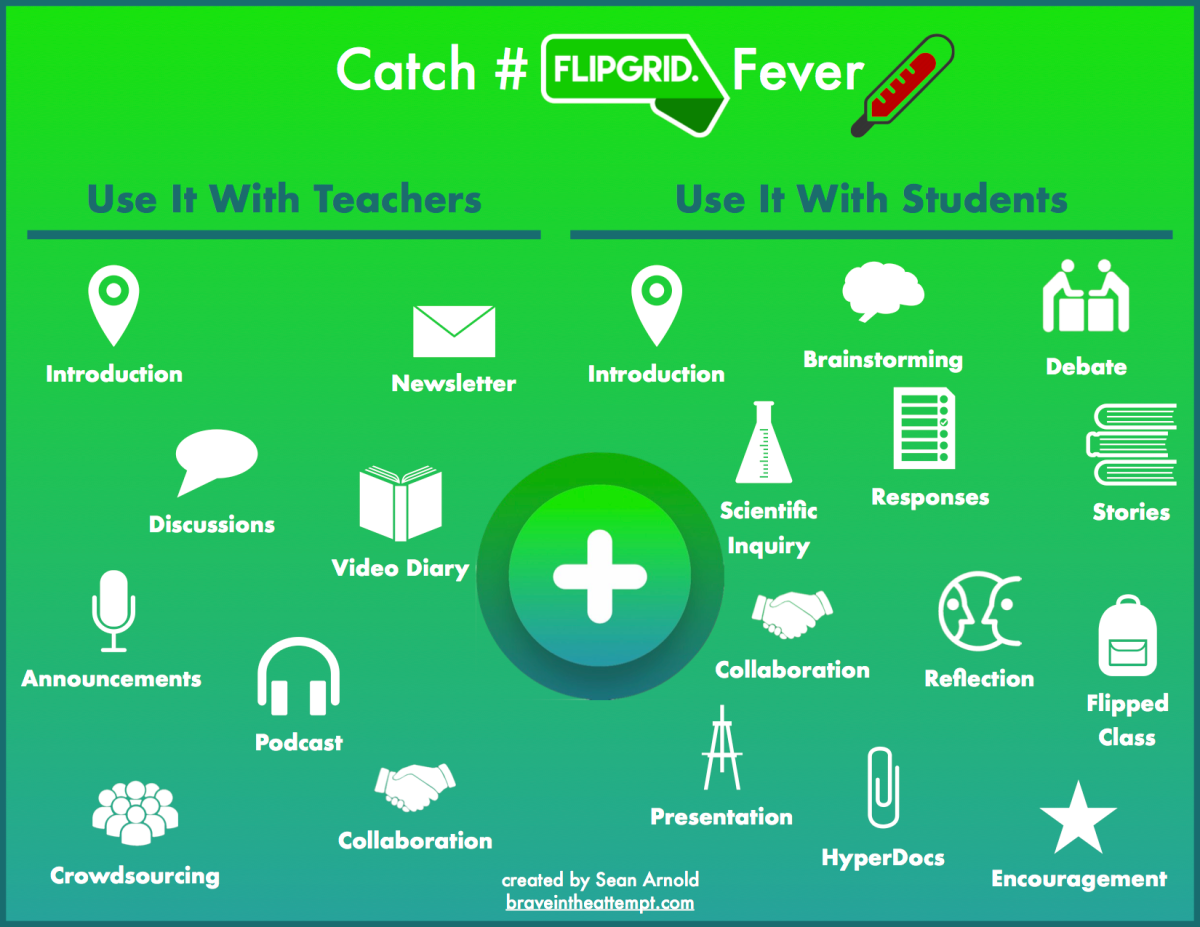
We have been using Flipgrid quite a lot this year - it's one of my favourite new finds. I dabbled a bit last year, but this year I've made a concerted effort to use it more consistently. I've made some progress in that area, and I'm looking forward to using it more effectively as time goes by.

This is the tool fo you if you have ever wanted a way for students to provide a verbal/video response to a prompt without needing to host the video somewhere (eg film on an iPad, then upload to Google Drive, then share... so many steps!) Students can log in with their school email credentials and record a video right away. The teacher has control over whether the videos are private or viewable by other students in the class (or, in fact, by other students with the link to the "grid")

There are lots of great resources created by teachers for integrating the use of Flipgrid in the classroom and beyond. For example :

Flipgrid eBook - The Educators' Guide to Flipgrid. This has everything you need to get started. How to sign up, how to give your students access, how to go beyond simple videos.

Flipgrid Integration - So many ideas for integrating Flipgrid in specific subject areas, for specific ages!


Following Global School Play Day (see last week's post), I asked my students to reflect on their experiences. I recorded a video prompt in Flipgrid, and provided them with some reflection questions to consider.


I was out sick, so this was an activity that I was able to leave for my students to complete with a substitute (another perk to using Flipgrid!). Many responses were thoughtful and detailed some (as is often the case in middle school when there is a substitute) lacked depth. When I do this again next year, I will take more time to prepare my students to respond thoroughly.

Most of the feedback I received was very positive. Students were happy to have had a "break from the normal school day." For the most part, students felt that the expectations had been followed by their peers, and that it was a fun experience. Many of them commented on the fact that it was enjoyable to be able to do what they wanted, when they wanted, speaking to the fact that a "normal" school day is generally structured by the teacher. I am interested in exploring how more of that freedom can be incorporated into my classroom.

One of the comments that was surprising to me came from a grade 8 student. She stated first that she enjoyed Global School Play Day, but that, "I wished there were more activities I could do, because I was kind of bored. Like, if I was allowed to, like, build a fort, I would be pretty happy."


I was surprised by this response because I tried very hard to be clear that I was not putting any limits on what students were "allowed" to do. In fact, I explicitly stated that, as long as they were following the expectations we established together, anything was possible. All of the students in my classroom chose to spend most of the day playing either cards or board games, so I wonder if she felt that building a fort would break some sort of unspoken rule. I will absolutely follow-up with this particular student, to determine how I could have made it clear that any activity was possible.


Students' Flipgrid responses

Another comment that came from multiple students, and one that didn't surprise me at all, was that they wished there had been more organization to the day. They are so used to having their time scheduled for them, they struggled when they were given freedom to choose their own paths. I see this in project work as well, and I hope that having experienced this day of unstructured play will allow them to draw some comparisons when it comes time to choose their passion projects, or other free-choice ways of showing their learning.

Thinking creatively, making decisions autonomously, and holding themselves accountable are skills I strongly encourage in my students. These are the skills they will need moving forward. These are skills we could all stand to improve upon.

Thursday, February 7, 2019

It Takes Time, and it is Incredibly Worth It

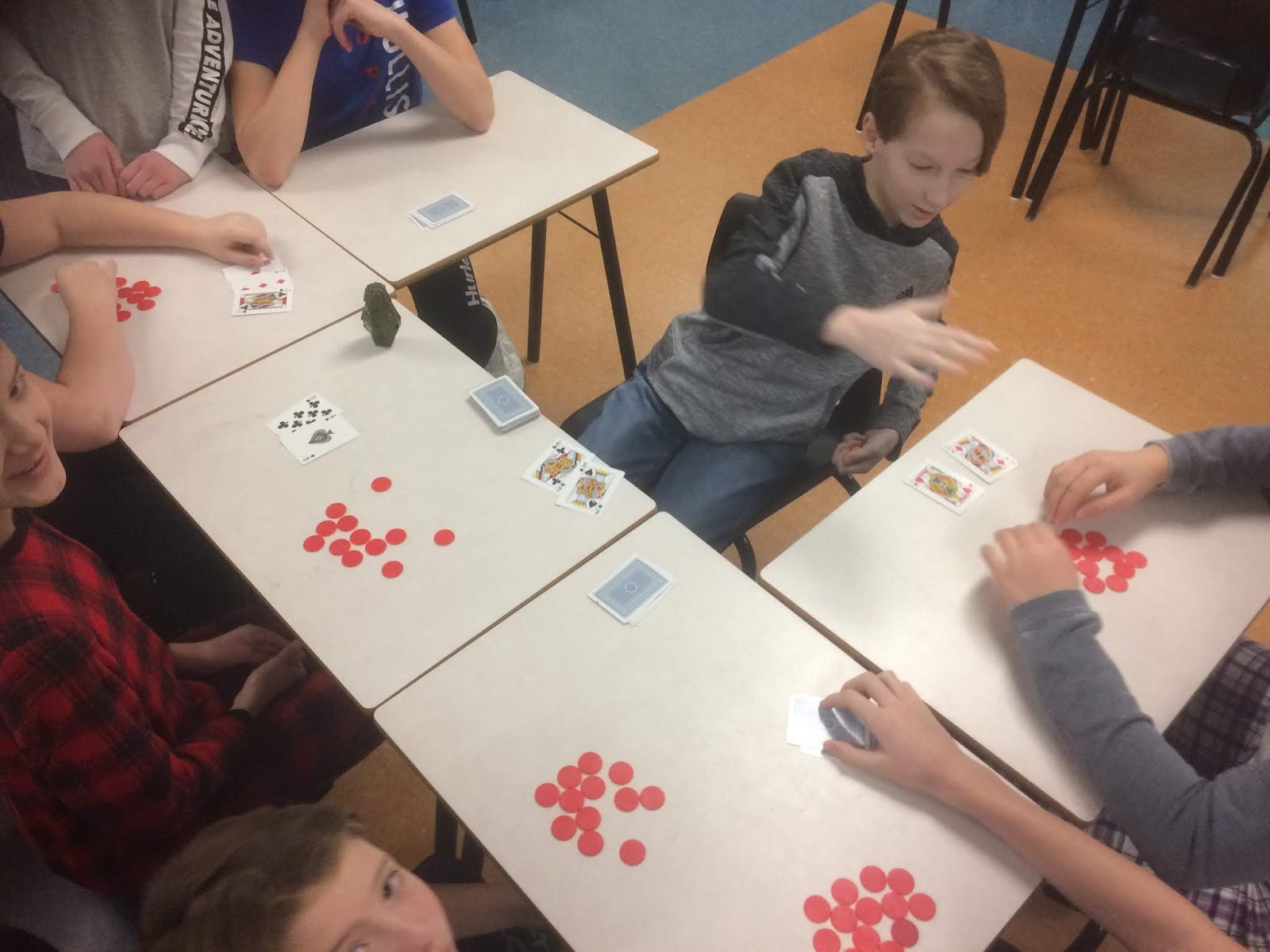
Today was Global School Play Day (globalschoolplayday.com) and my students and I participated wholeheartedly. There was a wonderful hum in the room all day, with all of my students engaging in unstructured play time. They organized themselves, chose their activities, rose to the expectations we had set out, and generally had an awesome day. The activities they chose were varied and completely self-directed.


Some students preferred to spend their time reading...
... or drawing ...


... or learning to play chess!


Some of the highlights from the day include:

- My newest student (arrived just three weeks ago) noticing someone not being included and inviting them to take part in a game without making a big deal out of it.

- The sincere and sudden vocal excitement from all players when another player took a risky move in Black Jack and it paid off. The rest of the activity in the classroom stopped and we all revelled in the glory of a well-timed risk.


- This exchange, fully embracing the expectation to be good communicators :
     "Do you feel like playing Spot It with me?"
     "Not right now, but when I'm done this game of Solitaire I will."
     "OK, sounds good."


- This statement when I approached a group playing Cranium, showing their willingness to improvise. "We don't really know what the actual rules are, so we made up our own. Is that OK?" YES.


One of the most important contributors to the success of GSPD was the lead-up over the two days preceding the actual event. As a class, we spend a significant amount of time focused on building strong community, so I already have some structures in place to set expectations collaboratively with my students. For this activity, I began by outlining my expectations of them for the day.

Students then took some time to come with expectations they had of me and of each other. Each class came up with their own, and the differences in their expectations is reflective of the culture of the individual classes. The grade 8s spend a lot of time with me (at least 3 hours daily), while the grade 7 class only comes to me for an hour each day. As a result, we haven't had as much time to focus on community building.

Grade 8 Expectations


Grade 7 Expectations


We also talked about what they were excited about for a day devoted to unstructured play, and what they were worried or concerned about. This part of the conversation was very helpful to me, as it let me put some of their worries to rest (some worried about what would happen if a toy was accidentally broken, some that they would not be able to handle a full day without an adult organizing them into activities and groups, others that there might be judgement about what games or activities people chose) I was so impressed with their openness in sharing their worries, and the care they took in responded to the concerns of others (some of the expectations above came out of the conversation about worries) Without those conversations ahead of time, I think our day could have played out very differently. Having a list of expectations that we co-created allowed me to quickly make reference to #4 for example, and students would use them to remind each other of what they should be doing.

This student taught multiple classmates how to play chess over the course of the day

Students creating a marble maze together


I had a moment of concern when I sent out my memo to parents last week, explaining the event. We have had some school closures lately because of weather, and this would be another day without "real school", but I did not receive any negative responses from parents at all. I've been really focused on building community with my parents this year as well, through very regular communication about what goes on in our classroom. I hope and believe this has contributed to a certain level of trust when it comes to some of the paths I take with my students.

Grade 7s at play!


Building a strong community is the reason I can engage in the types of activities I write about on this blog. It takes time, and it is incredibly worth it.


Wednesday, November 28, 2018

Not All of Them, Not All of the Time, but Enough

In 2011, Xara Choral Theatre was approached by the Truth and Reconciliation Commission to create a piece of choral theatre for the Halifax event. I was fortunate to be part of Xara Choral Theatre's commissioned adaptation of the book Fatty Legs. The book tells the story of one Inuit girl's experiences at Residential School in Aklavik. For that first performance in front of 500 survivors, we were honoured to have Olemaun, the Inuit girl of the book, and her daughter-in-law Christy join us as our narrators.

I felt great shame and anger in 2011. It was the first I had ever heard of the Indian Residential Schools in Canada, and I felt that my education system had failed me epically. At the time, I had already been a middle school teacher for 7 years, and the feeling that I had been failing to educate my students about the realities of Indigenous experiences in Canada was upsetting. Every year since then, I have made it a priority to read Fatty Legs with my students, and to spend time discussing the legacy of residential schools beyond that one story.

We have remounted our choral theatre production of Fatty Legs three times since 2011, once for a tour of schools in the Maritimes, and twice for school shows in Ontario. My students have been overwhelmingly supportive of the time I need to take away from my classroom in order to bring this story to other children.

This year, following my two weeks away on tour, we were fortunate enough to be able to organize a Google Hangout with Olemaun and Christy. My grade 8 students took time in advance to prepare questions, and to organize the classroom in a way that would look and feel welcoming over a video chat (we went through several iterations of this, using the projector to gauge how we would look to a viewer - they wanted to avoid looking "intimidating, like we're ganging up on them.")


My students blew me away with their insightful questions, the intentness with which they listened, and their respect for Olemaun's lived experiences. They were kind, they prefaced their questions with some of the reasons why they were asking, they asked follow-up questions that showed they were really listening and reflecting during the conversation. Not all of them, not all of the time, but enough that the flow of the dialogue was natural and did not feel like an interrogation.


Forty-five minutes is barely enough time to scratch the surface of the legacy of residential schools, nor is it adequate for students who are speaking with an elder from a First Nations community (most of them for the first time). Afterwards, I asked students to reflect in writing on what had resonated the most with them in the conversation, and if they had any further questions that had come out of hearing the perspectives offered by Olemaun and Christy.

Below are some of the highlights. Some students chose not to respond to the writing prompt (this is always their right during our writing periods), but many did, and what they had to say revealed significant understanding and reflection.


Tuesday, November 13, 2018

Morning Circle & Affirmations

Related image

I am trying something new this year. That phrase, as my students would attest, is a common refrain from me! Most of them are happy to come along for the ride with me, although some remain resistant to anything that feels a little bit out of the ordinary. Hoping to encourage them to take those positive risks by the end of the year.

We start every morning in my class with a sharing circle. Students are encouraged, but not required, to share a "grimace" and a "sourire" (something that is bothering them, and something that is making them happy). Most students share at least a little bit each day, but there are those who have yet to take the risk. I am excited for the day that those few students feel safe enough to share something in the morning circle. This "frowns and smiles" approach was inspired by Monte Syrie's excellent blog, Project 180. If you are looking for another education blog to follow, that would be my top recommendation.

At the end of morning circle, we speak our affirmations :
Nous sommes des membres importants de cette communauté.
Nous sommes écrivains.
Nous sommes lecteurs.
Nous sommes mathématiciens.
Nous sommes formidables.

Many students join in on speaking these aloud together, while others choose to listen (and, I hope, speak them in their minds!) We have acknowledged that this might feel slightly "fromageux" (cheesy, in other words), and that positive self-talk takes practice.

I hope that some of those affirmations take hold in their brains. Just as they practice dribbling the basketball, adding fractions, and speaking French, I want positive self-talk to become habit for my students.

Tuesday, February 13, 2018

Literary Projects

Students in my 8th grade French Immersion class know that they are expected to be reading at all times, in French, at a level that is appropriate to them. We call this their "toujours devoirs" (always homework). They do not fill out reading logs, they do not write book reports, they do not have to read a certain amount per day, per week, or per month.

However, every five or six weeks, they are given approximately 5 hours of class time (over five days) to create a project based on one of the books they have recently read. There are only two main requirements that I provide to students for these projects : their project must in some way encourage others to read the book, and they cannot choose the same project they have previously completed (e.g. if they have done a painting as a literary project already this year, they cannot do another painting) The learning curve on what constitutes five hours of quality work is generally steep, but I find that my students appreciate the fact that I allow them to budget their own time and encourage them to do their best possible work. Most of the time, students impress me (and each other!) with their projects.

This is our third literary project of the school year, which means that students have already done two projects. I find that the third and fourth projects are generally ones where students are thinking outside of the box. Earlier in the year, they tend to choose the project types with which they are the most comfortable. By February, they have grown accustomed to my requests that they think creatively, try new things, take risks, and persevere.

Here are some things that my students are creating for their literary project today :

Two paintings, one representing the personalities of the characters in the book, the other showing an important object from a different book. 

At the top : a menu for a theme restaurant inspired by Le Petit Prince
On the bottom : a crayon drawing


The beginnings of a board game
A watercolour background is shaping up for this student's project

This student is creating a riddle-based scavenger hunt for the class to complete.

Another board game is shaping up nicely. This student required some encouragement to create something a little more "professional" looking - sometimes grade 8 students suffer from "good-enough-itis" ;-)

A website in progress

Thursday, June 23, 2016

Rube Goldberg Machines - Take 2

It's time once again for Rube Goldberg Machines! Last year, I posted about my class' experience leading up to and during this activity. This year, I only gave students one day of lead time (we were working on a large project up until two days before this activity, and I didn't want to distract from that). They were excited and curious, and spent approximately 20 minutes making lists of things that could help them solve an unknown design challenge. I also gave them the opportunity to request items from me, but only if they got their requests in ahead of knowing what the challenge entailed.

To start the day of the challenge off, I showed my students the OK Go video, This Too Shall Pass. If you've never seen it, I highly recommend taking 4 minutes right now to do so. I'll wait...

...

...

...

...

Amazing, right? This was the visual prompt I used to set my students up to create very interesting constructions. They had brought in a wide variety of items once again. Along with the basic items I provided to them (paper, tape, a tack, a marble, paper clips, clothespins, yarn, straws, a paper plate and a balloon) groups had brought in :


  • duct tape
  • nail scissors
  • glue guns
  • a canvas lawn chair
  • empty water bottles
  • a plastic bucket
  • a pillow
  • giant sponges
  • locker mirrors
  • skipping rope
  • tin foil
As they began to work with their groups, I circulated around the classroom, listening in on conversations. I consider it a mark of enormous success that students did not ask me what they should try, but instead jumped straight into collaborating with their group members to make a plan.

Taking stock

Beginning to plan

Group 1 : Materials

Group 2 : Materials

Group 3 : Materials
As students planned, I listened. Here are some of the comments I overheard :

"Let's start by putting all the things that could pop the balloon in a pile."

"Ok, now try that way. Make a little dent in it."

"If we put the ball here instead of there, the ruler would have enough energy to move the sponge."

"We should put the tack on a string, and then it could swing and pop the balloon."

"We should start at the end of our machine - how will be pop it?"

"I'm not really sure if this is going to work, but it's a start."

"It can't go slow, or else it won't move the potato masher!"


Although none of the groups managed to pop their balloon, they had a lot of fun trying. At the end of the period, after they had all tried their machines, I took a moment to read them the list of comments I had overheard, and to underline the importance of perseverance. All of the groups had ideas for how they could have improved on their design, even though they knew they were not going to have a second chance.

The amount of learning that went on in those two hours that they were working collaboratively to solve a problem was phenomenal! It gave me a renewed sense of just how important it is to give students the freedom to try, fail, and try again.